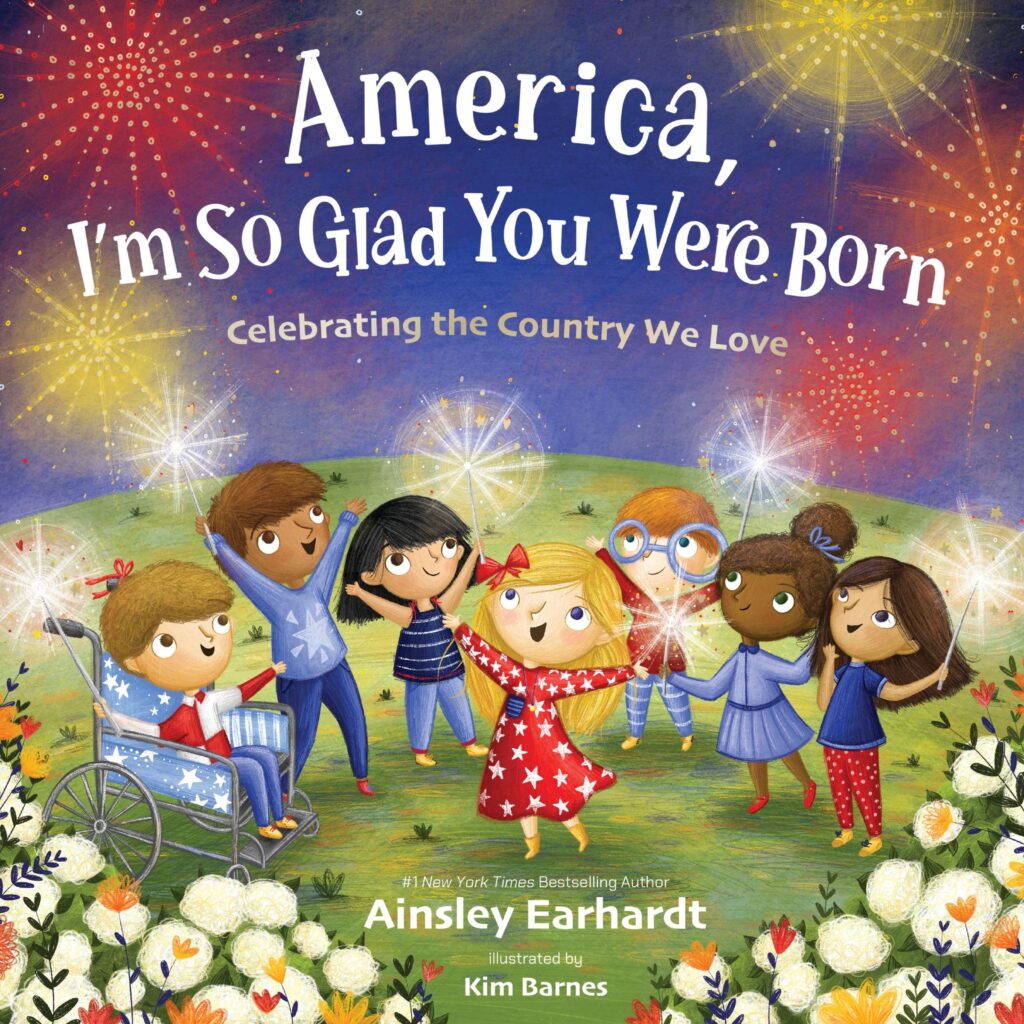
There is no shortage of patriotic children’s books on the market, but few attempt to balance celebration with reflection quite like America, I’m So Glad You Were Born: Celebrating the Country We Love. Written by Doreen Cronin and illustrated by Laura Cornell, this picture book aims to introduce young readers to the concept of national pride without veering into jingoism. As an editorial reviewer, I picked up a copy to see how it actually performs in a real-world reading setting—specifically, with a mixed-age group of children ages 4 to 8 during a weekend story time.
The book’s core premise is straightforward: it takes the reader on a journey through American landscapes, historical moments, and everyday scenes, all framed around the idea of gratitude for the country’s existence. The text is rhythmic and reads aloud well, which is important for a book intended for shared reading. The illustrations are colorful and detailed, though they sometimes feel a bit busy for younger children who might struggle to focus on a single element per page.
In terms of key functional features, the book is a standard 40-page hardcover with sturdy pages that can withstand repeated handling. The language is accessible for early elementary readers, but the vocabulary occasionally dips into abstract concepts like “freedom” and “opportunity” that may require adult explanation. The book does not shy away from mentioning historical figures and events—such as the Statue of Liberty, the moon landing, and the civil rights movement—but it does so in a broad, positive light that avoids deeper complexities. This is a deliberate choice, but one that may leave older children or more curious readers wanting more nuance.
Real-world usage context matters here. During my test, the book worked best as a one-on-one read with a parent or teacher who could pause to discuss the illustrations and answer questions. In a group setting, the smaller details in Cornell’s artwork—like hidden jokes or specific cultural references—were often missed unless explicitly pointed out. The book’s length is appropriate for a bedtime story or a classroom circle time, though some children became restless around the halfway mark. The pacing is consistent, but there is no major narrative arc; it is more of a thematic collection of moments than a story with a beginning, middle, and end.
One limitation or trade-off is that the book’s celebratory tone can feel one-sided. While it acknowledges challenges like “hard times” in a vague way, it does not engage with any specific historical struggles or differing perspectives. For families or educators looking for a more balanced introduction to American history—one that includes, for example, the treatment of Indigenous peoples or the legacy of slavery—this book will feel incomplete. It is not a history lesson; it is a tribute, and that distinction is important to note.
Comparing this to similar or alternative product categories, it sits alongside other patriotic picture books like America the Beautiful by Katharine Lee Bates or Our Flag by Carl Memling. However, Cronin’s book is more modern in its illustrations and slightly more inclusive in its depiction of diverse families and settings. That said, it lacks the direct historical grounding of a book like The Story of America for older children, and it does not have the interactive elements found in some newer nonfiction picture books (such as lift-the-flap features or maps). For pure emotional appeal, it is effective, but for educational depth, it falls short.
Who is this book suitable for? It is best for families who want a gentle, positive introduction to American symbols and ideals for children ages 4 to 7. It works well as a gift for a patriotic holiday, a baby shower, or a kindergarten classroom library. It is not suitable for older children (ages 9 and up) who are ready for more critical or detailed historical content, nor for educators seeking a comprehensive social studies resource. Additionally, families who prefer a more global or less nationalistic perspective may find the tone overly sentimental.
Overall, America, I’m So Glad You Were Born succeeds in what it sets out to do: create a warm, visually engaging tribute to the United States that can spark conversations between adults and children. It does not pretend to be a definitive history, and it does not try to persuade anyone of a political viewpoint. It is simply a heartfelt, if somewhat idealized, celebration. If you approach it as a starting point for discussion rather than a standalone lesson, it can be a useful addition to a child’s bookshelf.
"Handpicked and reviewed by the DreamAlliance team — every product is verified and linked directly to Amazon."